CLOROFILLA
CLOROFILLA: THE VISION
As landscape is increasingly consumed as image, pre-seen, pre-filtered, optimised for digital circulation. Clorofilla looks for something else: not a new image of landscape, but a different possibility of encounter.
The project begins with places that have no exceptional qualities. Not spectacular, not remote, not chosen for what they represent. In these ordinary settings, a gaze shaped by portraiture finds presences: quiet figures, sometimes ambiguous, occasionally unsettling.
Not characters, not stories, but something that precedes narrative and resists immediate identification.
This is where infrared becomes necessary. Not as a technique applied from outside, but as the language in which this particular gaze takes form. In a visual culture that has already seen everything, infrared interrupts the habit of recognition: the sky behaves differently, the light does not confirm what we expect. The image cannot be consumed before it is seen.
What surfaces belongs neither to invention nor to effect: it is a presence already written into the places, one that ordinary visual culture tends to leave in the background. Clorofilla moves within this threshold. Not to reveal a hidden world, but to return attention to what continues to exist before being recognised, classified, or consumed as image.
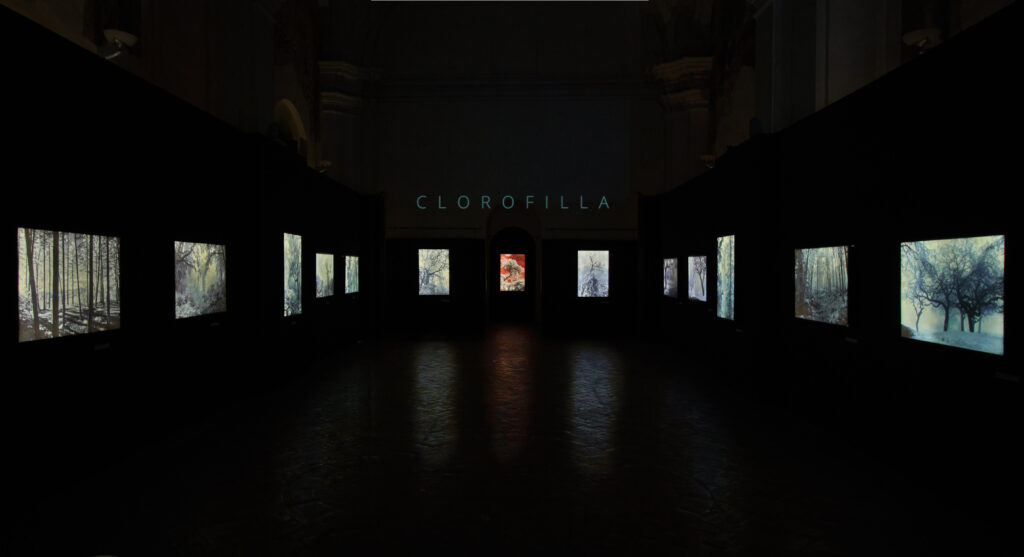
The Clorofilla project received second place in the Fine Art / Other category at the International Photography Awards 2025 (IPA).
This year’s competition saw nearly 14,000 entries from 100 countries, reviewed by a distinguished panel of internationally renowned photography experts.

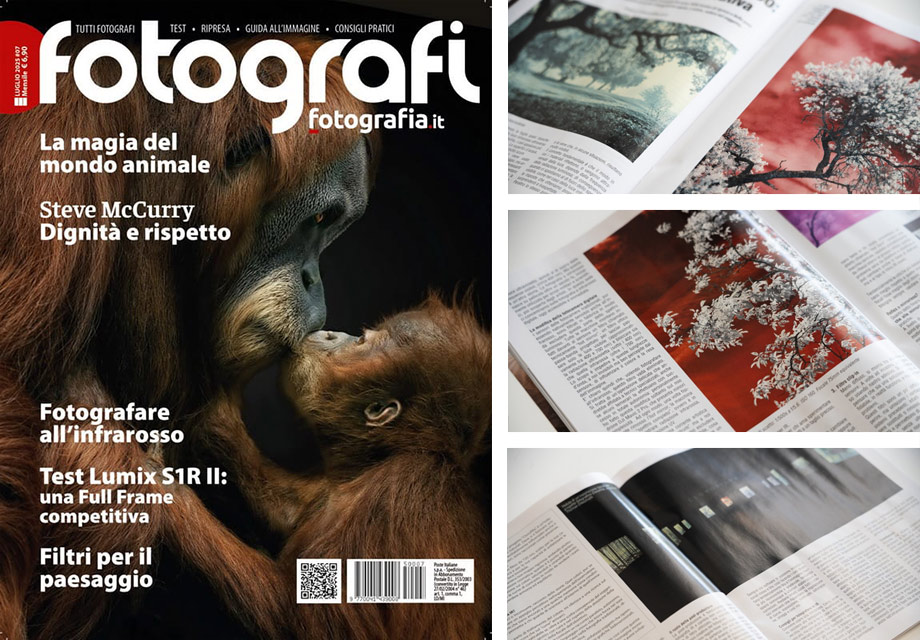
In the July/August issue of Tutti Fotografi, you’ll find an article I wrote in which I share the methods and technical choices behind infrared photography, a key aspect of the work I’ve been developing through Clorofilla.
The final part of the piece also includes a section dedicated to the project, with images of selected works.
Available in both PRINT and DIGITAL formats, at newsstands and online at www.fotografia.it